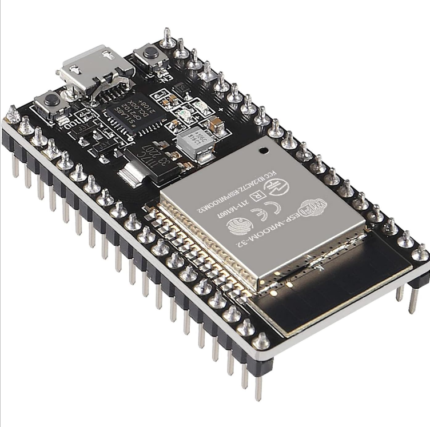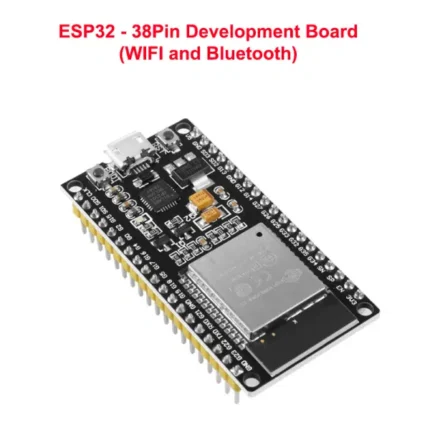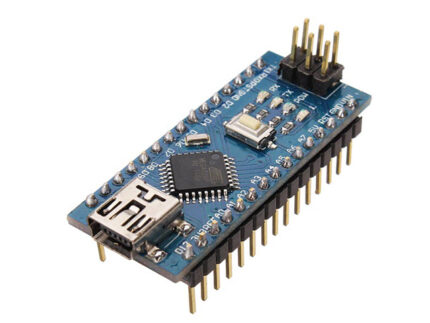

ESP32-S3-N16R8 Development Board WIFI and Bluetooth
Original price was: 750.00 EGP.650.00 EGPCurrent price is: 650.00 EGP.
The ESP32-S3 N16R8 Development Board combines a dual-core 240MHz processor with 16MB Flash, 8MB PSRAM, 2.4GHz Wi-Fi and Bluetooth 5 Low Energy. Its large memory capacity makes it suitable for IoT, displays, cameras, audio processing, automation and embedded AI projects.
Compatible with Arduino IDE, ESP-IDF, PlatformIO and supported MicroPython builds.
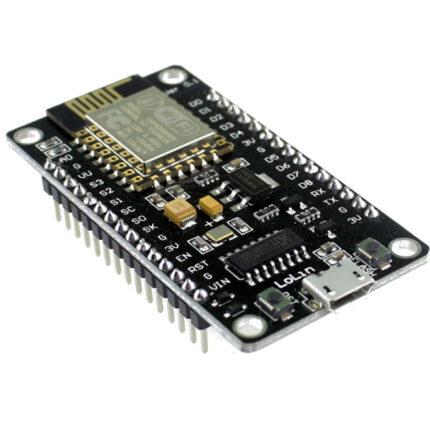
ESP32-S3 N16R8 Development Board
The ESP32-S3 N16R8 Development Board is a powerful wireless development platform for advanced IoT and embedded-system projects. It combines a dual-core 32-bit Xtensa LX7 processor with integrated 2.4GHz Wi-Fi and Bluetooth 5 Low Energy connectivity.
The N16R8 designation indicates that the module includes 16MB of Flash memory and 8MB of PSRAM. Therefore, it provides significantly more storage and working memory than standard ESP32 boards with smaller memory configurations.
The additional PSRAM is especially useful for applications that handle images, frame buffers, audio data, large web interfaces or machine-learning models.
Main Features
- ESP32-S3 dual-core microcontroller
- Dual-core Xtensa 32-bit LX7 processor
- Clock frequency up to 240MHz
- 16MB external Flash memory
- 8MB external PSRAM
- Integrated 2.4GHz Wi-Fi
- Bluetooth 5 Low Energy connectivity
- USB Serial/JTAG support
- Native USB OTG capability
- Multiple programmable GPIO pins
- Rich digital and analogue peripherals
- Hardware acceleration for neural-network and signal-processing workloads
- Low-power operating modes
- Suitable for Arduino and ESP-IDF development
- Integrated PCB antenna on common module versions
Technical Specifications
| Specification | Value |
|---|---|
| Microcontroller | ESP32-S3 |
| CPU | Dual-core Xtensa 32-bit LX7 |
| Maximum Clock Speed | 240MHz |
| Internal SRAM | 512KB |
| Flash Memory | 16MB |
| PSRAM | 8MB |
| Wi-Fi | 2.4GHz 802.11 b/g/n |
| Bluetooth | Bluetooth 5 Low Energy |
| USB | Native USB OTG and USB Serial/JTAG support |
| GPIO Logic Level | 3.3V |
| Development Frameworks | Arduino IDE, ESP-IDF and PlatformIO |
| Programming Languages | C, C++ and supported MicroPython builds |
| Antenna | Integrated PCB antenna on common N16R8 modules |
Wireless Connectivity
The ESP32-S3 N16R8 Development Board supports 2.4GHz Wi-Fi for connecting projects to wireless networks, local servers and cloud platforms. It can operate in Station, Access Point or combined Station/Access Point modes.
Bluetooth 5 Low Energy allows communication with smartphones, tablets, sensors, beacons and other BLE-compatible devices.
Please note that the ESP32-S3 supports Bluetooth Low Energy only. It does not support Bluetooth Classic profiles such as traditional Bluetooth Serial Port Profile.
Interfaces and Peripherals
Depending on the pins exposed by the development-board version, the ESP32-S3 supports:
- UART serial communication
- SPI interfaces
- I²C communication
- I²S digital audio
- PWM outputs
- Analogue-to-digital conversion
- Capacitive touch inputs
- USB OTG
- USB Serial/JTAG debugging
- TWAI-compatible communication
- LCD and camera interfaces
- Pulse counting and remote-control peripherals
The ESP32-S3 chip offers up to 45 programmable GPIOs. However, the number available to the user depends on the board layout, connected Flash, PSRAM and onboard hardware.
Common Applications
The ESP32-S3 N16R8 Development Board is suitable for:
- Internet of Things devices
- Smart-home automation
- Wireless sensor systems
- Camera and image-processing projects
- LCD and touchscreen interfaces
- Embedded web servers
- Bluetooth Low Energy devices
- Voice and audio applications
- Data logging systems
- Robotics and automation
- TinyML and embedded AI projects
- Educational electronics
Important Usage Notes
ESP32-S3 GPIO pins use 3.3V logic and are not generally 5V tolerant. Use a suitable level shifter when connecting 5V signal devices.
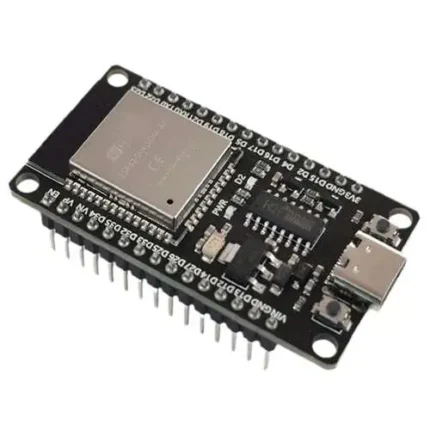
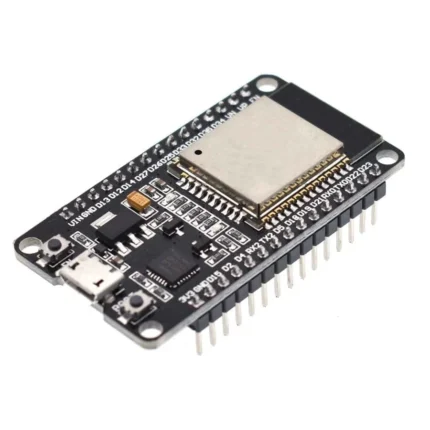
The exact number of USB connectors, onboard LEDs, buttons and exposed pins may vary between development-board revisions. Therefore, follow the pin labels printed on the supplied board.
When configuring the board in your programming environment, select the correct Flash and PSRAM settings to access the full 16MB Flash and 8MB PSRAM capacities.