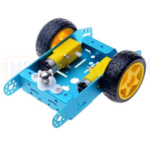
Line-Following Robot Car DIY Soldering Kit
260.00 EGP
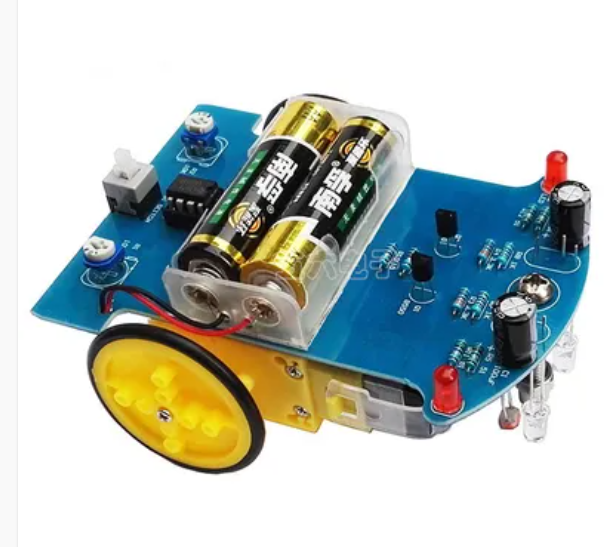
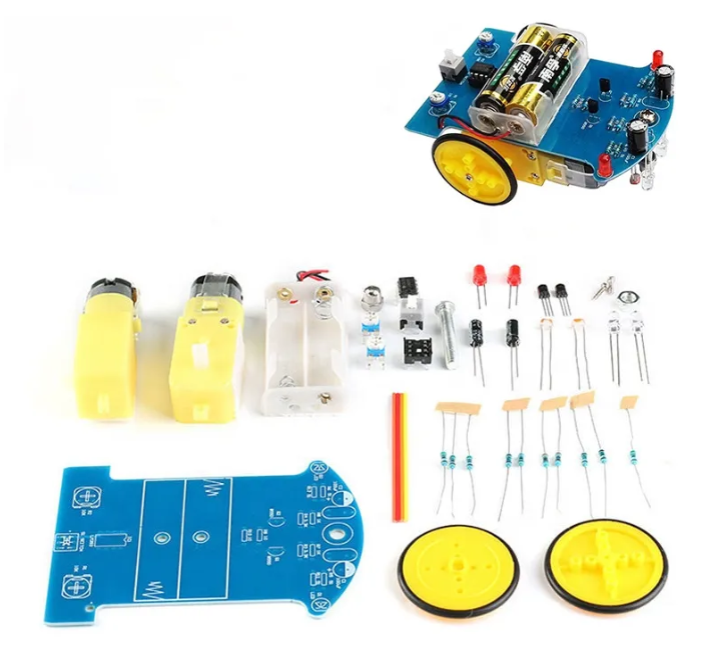
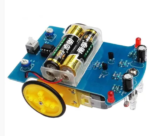
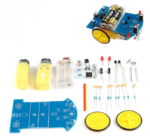
The D2-1 Line-Following Robot Kit is an unassembled educational soldering project that automatically follows a black track on a light surface. It includes the PCB chassis, two DC motors, wheels, photoelectric sensors, an LM393 comparator circuit, and a 2×AA battery holder. Soldering and assembly are required; batteries are not included.
D2-1 Line-Following Robot Kit
The Line-Following Robot Kit is a practical DIY electronics project designed for students, beginners, and makers who want to learn soldering and basic robotic control. After assembly, the small two-wheel robot can automatically follow a black line drawn on a light-colored surface.
This kit arrives unassembled. Therefore, users must identify the electronic components, solder them onto the PCB, install the motors and wheels, and connect the battery holder. The assembly process provides useful hands-on experience with resistors, capacitors, LEDs, transistors, integrated circuits, sensors, and DC motors.
No Arduino board, microcontroller programming, or computer connection is required.
How the Line-Following Robot Works
The robot uses two photoelectric sensing sections positioned close to the floor. Each section combines a light source with a photosensitive resistor. Because black and white surfaces reflect different amounts of light, the circuit can detect whether each sensor is positioned over the dark track or the surrounding light surface.
The LM393 voltage comparator processes the signals from the sensors. It then controls the two S8550 transistor motor-driving stages. When the robot begins moving away from the line, one motor slows down or stops. Meanwhile, the other motor continues rotating and corrects the direction of travel.
Two adjustable 10K potentiometers allow the user to tune the sensitivity of the left and right sensing circuits. Consequently, the robot can be calibrated according to the track, surface, and surrounding lighting conditions.
Educational DIY Soldering Project
The Line-Following Robot Kit is suitable for learning basic electronic assembly and troubleshooting. It helps users understand component polarity, resistor identification, PCB markings, motor direction, sensor calibration, and mechanical installation.
Furthermore, the finished PCB works as both the electronic control board and the robot chassis. This design reduces the number of mechanical parts and creates a compact educational robot.
Key Features
- Model D2-1 intelligent tracking car
- DIY unassembled electronic kit
- Automatically follows a dark line on a light surface
- LM393 voltage-comparator control circuit
- Two photosensitive tracking sensors
- Two adjustable sensor-sensitivity controls
- Two DC reduction motors
- Two wheels with rubber tires
- LED power and tracking indicators
- PCB functions as the robot chassis
- No programming or Arduino board required
- Operates from two AA batteries
- Suitable for soldering practice and STEM education
Assembly and Calibration
Install the components according to their PCB references and correct polarity. Begin with the low-profile components, such as resistors and the IC socket. Afterward, install the capacitors, LEDs, transistors, sensors, switch, motors, and battery holder.
Once assembly is complete, place the robot over a suitable black track and adjust both potentiometers until the motors respond correctly. If a motor rotates in the wrong direction, reverse its two connection wires.
For best results, use a clear black line on a flat white surface. The recommended track width is approximately 15–20mm. Very reflective floors, strong sunlight, or uneven surfaces may affect sensor performance.
Important Notes
- Soldering and mechanical assembly are required.
- Two AA batteries are required but not included.
- A soldering iron, solder wire, side cutter, and screwdriver are not included.
- Adult supervision is recommended for young students.
- Confirm component values and polarity before soldering.