

KY-039 Heartbeat Sensor Module – Analog Pulse Sensor
Original price was: 40.00 EGP.33.00 EGPCurrent price is: 33.00 EGP.
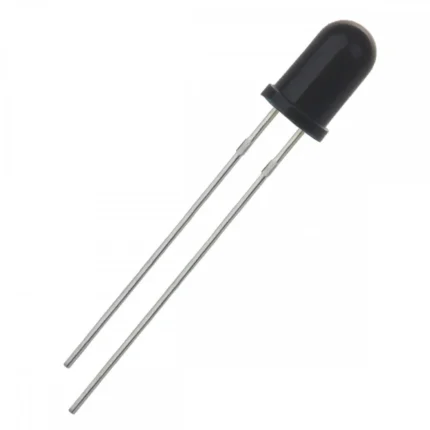
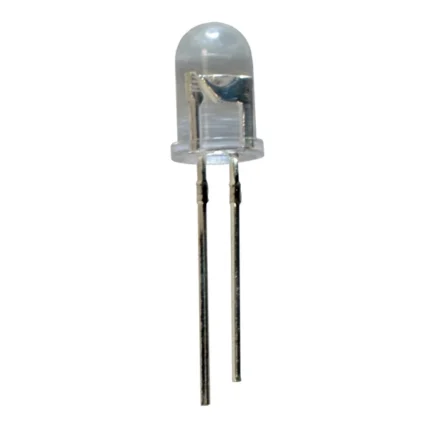
The KY-039 Heartbeat Sensor Module uses an infrared LED and a phototransistor to detect changes in blood flow through a fingertip. It provides a raw analog output for Arduino, ESP32, STM32, and other microcontroller projects operating from 3V to 5V.
KY-039 Heartbeat Sensor Module
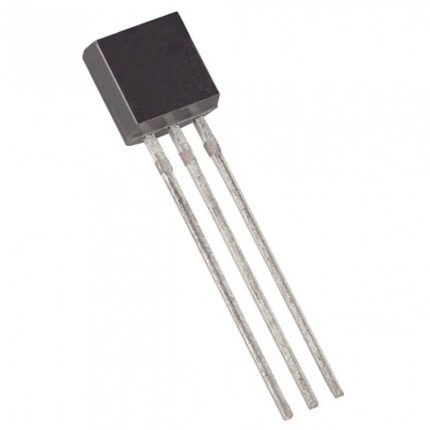
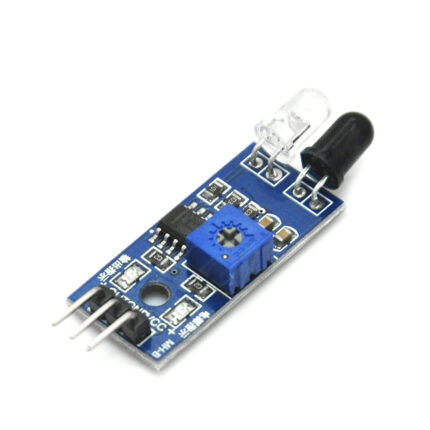
The KY-039 Heartbeat Sensor Module is a compact optical sensor designed for educational pulse-detection projects. It uses an infrared LED and a phototransistor to detect small changes in the amount of light passing through a fingertip.
When the heart pumps blood through the finger, the amount of transmitted infrared light changes slightly. The phototransistor converts these changes into a varying analog voltage. A connected microcontroller can then sample and process this signal to detect pulse peaks and estimate the heart rate in beats per minute.
The module does not calculate BPM internally. Therefore, the microcontroller program must filter the raw signal, detect each pulse peak, and calculate the time between consecutive beats.
Main Features
- Optical fingertip pulse detection
- Built-in infrared light emitter
- Built-in phototransistor receiver
- Raw analog signal output
- Operating voltage from 3V to 5V DC
- Three-pin interface
- Compact and lightweight PCB
- Compatible with standard 2.54mm connections
- M2 mounting hole for easy installation
- Suitable for educational and experimental projects
Pin Configuration
- S: Analog signal output
- +: Positive power input from 3V to 5V
- –: Ground connection
For Arduino, connect the signal pin to an analog input such as A0. Next, connect the positive pin to 5V and the negative pin to GND.
The module can also operate from 3.3V with compatible controllers. However, Raspberry Pi boards do not include a built-in analog input. Therefore, an external ADC module is required when using this sensor with a standard Raspberry Pi.
Common Applications
The KY-039 Heartbeat Sensor Module is suitable for:
- Arduino pulse-detection projects
- Educational biomedical experiments
- Student electronics projects
- Interactive heartbeat displays
- Experimental fitness monitors
- Wearable-device prototypes
- LED heartbeat indicators
- Data-logging and signal-processing projects
Getting Better Readings
Place the fingertip gently between the infrared LED and the phototransistor. Then, keep the finger still while collecting data.
Ambient light, finger movement, pressure, and electrical noise can affect the signal. For better results, shield the sensor from room lighting and hold it securely against the fingertip.
Software averaging and peak-detection algorithms can also improve signal stability. Nevertheless, readings may vary between users and environments.
Important Medical Disclaimer
This is an educational sensor module, not a certified medical device. It must not be used for diagnosis, emergency monitoring, treatment decisions, or any safety-critical medical application.
For medical measurements, use a properly tested and certified heart-rate monitor.